




Continuous Vulnerability Scanning
Access the visibility you need to identify vulnerabilities across your business or organization. Prioritize remediation and maintain confidence in your security posture with expert managed vulnerability scanning services. Inquire today for a trusted solution.
Continuous Vulnerability Scanning services ensure constant visibility, zero alert fatigue

Continuous Vulnerability Scanning services ensure constant visibility, zero alert fatigue
Continuous Vulnerability Scanning services ensure constant visibility, zero alert fatigue
Cybersecurity threats evolve daily, and your environment changes constantly. New systems, updates, and configuration changes can introduce vulnerabilities long after a penetration test is complete.
Our Continuous Vulnerability Scanning Service using GuardNest gives ongoing visibility across your operational environment, so you can identify and address risks before they become incidents.
Cybersecurity threats evolve daily, and your environment changes constantly. New systems, updates, and configuration changes can introduce vulnerabilities long after a penetration test is complete.
Our Continuous Vulnerability Scanning Service using GuardNest gives ongoing visibility across your operational environment, so you can identify and address risks before they become incidents.
What is Continuous Vulnerability Scanning?

What is Continuous Vulnerability Scanning?
What is Continuous Vulnerability Scanning?
It's a penetration testing solution managed by a professional cybersecurity service that regularly scans networks, systems, servers and internet-facing assets to identify security vulnerabilities, misconfigurations and emerging cybersecurity risks.
Unlike a traditional penetration test, which provides a detailed assessment at a specific point in time, it helps organizations prioritize remediation, maintain visibility of their security posture and reduce the likelihood of cyber incidents as your environment changes.
Detect newly introduced vulnerabilities
Prioritize remediation efforts
Reduce exposure between security assessments
Maintain visibility of their security posture year round
Demonstrate proactive vulnerability management
WorkNest security qualifications
OSCP & CREST certified penetration testing teams and our seasoned compliance & data protection consultants makes WorkNest your #1 choice for cybersecurity services and solutions.
Types of Vulnerability Scanning
Monitor internal systems, internet-facing infrastructure, web applications and endpoints. Find the right approach for your environment, security objectives and compliance requirements.
Identify vulnerabilities within your internal network, including servers, workstations, network devices and other connected systems.
Ideal for organizations that want visibility of security weaknesses that may be exploited after an attacker gains access to the environment, and for security teams, consultants, and organizations performing standalone or manual vulnerability assessments.
Gain deeper visibility into assets through agent-based scanning.
This approach provides enhanced vulnerability detection, configuration assessment and continuous monitoring across endpoints, servers and remote devices. Ideal for organizations seeking advanced visibility and vulnerability management capabilities.
Continuously assess websites and web applications for common security vulnerabilities, including misconfigurations, outdated components and application-level weaknesses.
Helps organizations maintain the security of customer-facing digital services, making it ideal for those that need ongoing assurance that their websites and web applications remain secure.
Monitor internet-facing systems, services and infrastructure for vulnerabilities that could be discovered by attackers. Provides ongoing visibility of risks across public IP addresses, domains and externally accessible assets.
Ideal for organizations that want continuous visibility of vulnerabilities across their internet-facing systems and services.
Why you need a Vulnerability Scanning service

Why you need a Vulnerability Scanning service
Why you need a Vulnerability Scanning service
The advantages of Continuous Vulnerability Scanning go beyond cost savings. They protect your organization and ensure long-term compliance, supporting your organization’s growth and success.
Identify security risks faster: Continuous scanning helps you detect newly introduced vulnerabilities as systems, applications and infrastructure change.
Make better security decisions: Understand which vulnerabilities present the greatest risk to your organization and prioritize remediation effectively.
Gain an independent view of your environmentL Regular scanning helps uncover weaknesses that may be overlooked by teams working with systems every day.
Reduce the likelihood of security incidents: Proactively identifying and addressing vulnerabilities reduces opportunities for attackers to exploit your environment.
The advantages of Continuous Vulnerability Scanning go beyond cost savings. They protect your organization and ensure long-term compliance, supporting your organization’s growth and success.
Identify security risks faster: Continuous scanning helps you detect newly introduced vulnerabilities as systems, applications and infrastructure change.
Make better security decisions: Understand which vulnerabilities present the greatest risk to your organization and prioritize remediation effectively.
Gain an independent view of your environmentL Regular scanning helps uncover weaknesses that may be overlooked by teams working with systems every day.
Reduce the likelihood of security incidents: Proactively identifying and addressing vulnerabilities reduces opportunities for attackers to exploit your environment.

Benefits of our expert Continuous Vulnerability Scanning
Take the initiative and protect your business or organization. Our specialist, trusted service is tailored to your specific needs for the maximum in security.

Gain continuous visibility
Understand your security posture today, not just at the time of your last assessment.
Reduce risk faster
Security teams can identify newly introduced vulnerabilities within hours rather than waiting until the next scheduled assessment.
Support compliance and governance
Demonstrate proactive vulnerability management to auditors, customers, and regulators.
Get more value from Penetration Testing
Maintain visibility between assessments and strengthen your overall security program.
Prioritize what matters most
Focus remediation efforts on the vulnerabilities most likely to affect business operations, customer data or regulatory compliance.
Extend your security team
Benefit from expert guidance and ongoing monitoring without increasing internal resource requirements.
Elevate Vulnerability Scanning with GuardNest
We partner with industry leading scanning tools and deliver results via GuardNest, our reporting platform,
to give you continuous visibility of your vulnerabilities and a clear path to remediation.
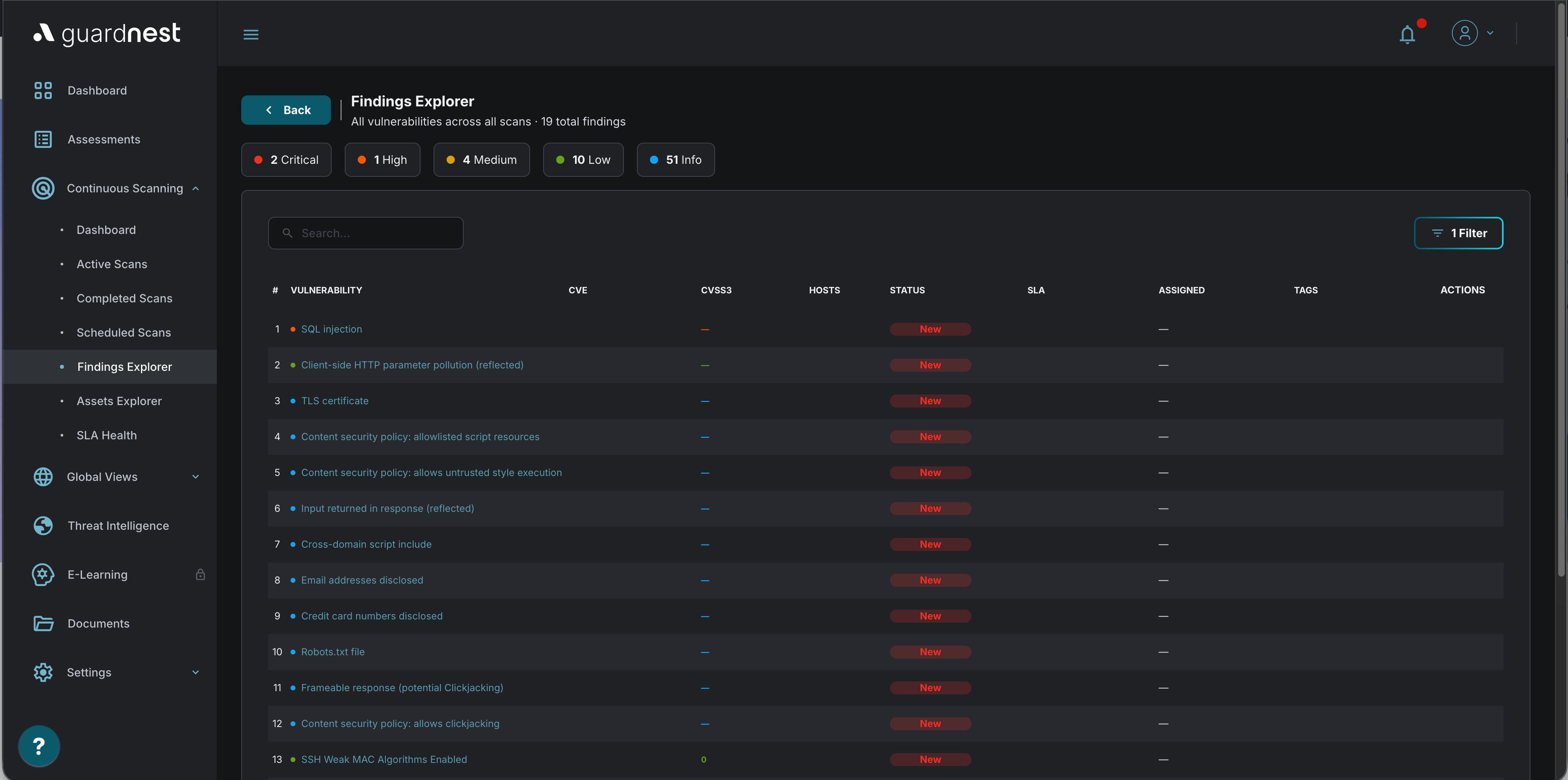
Live vulnerability visibility
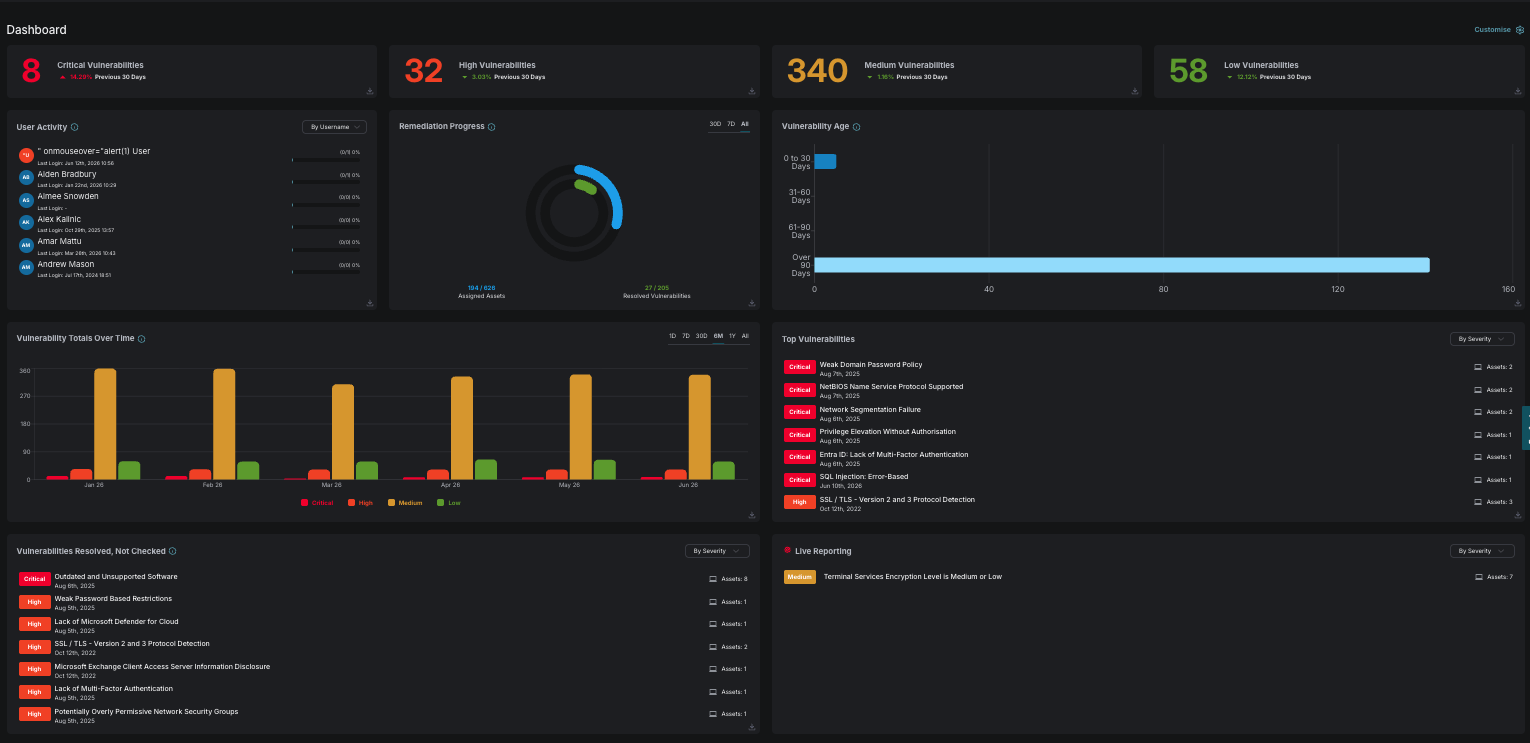
View newly discovered vulnerabilities as soon as they are identified, helping you respond quickly to emerging risks across your environment.
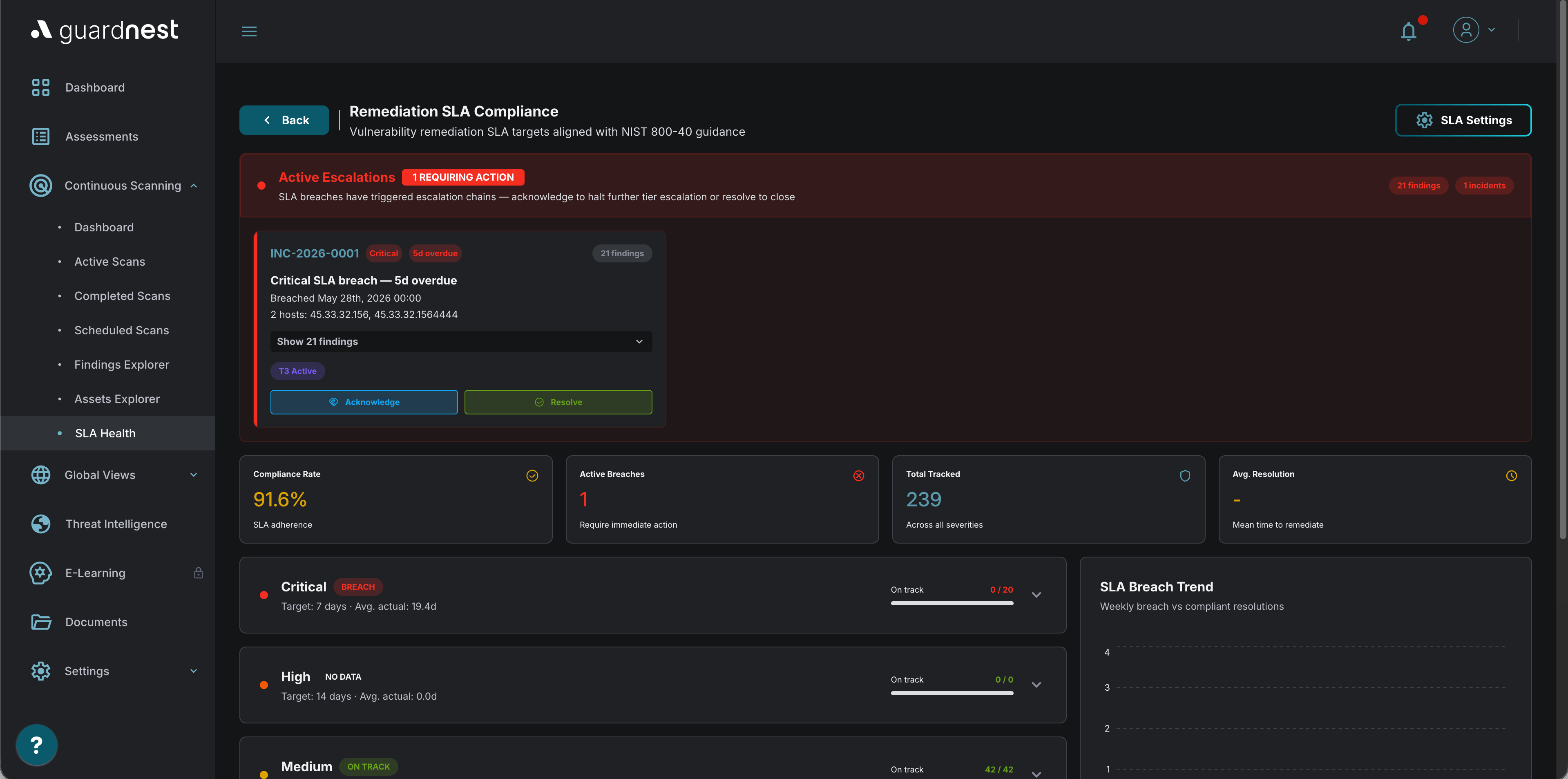
Clear risk prioritization
Focus on the vulnerabilities that matter most. Findings are prioritized by severity, exploitability and potential business impact, enabling your team to allocate resources effectively.
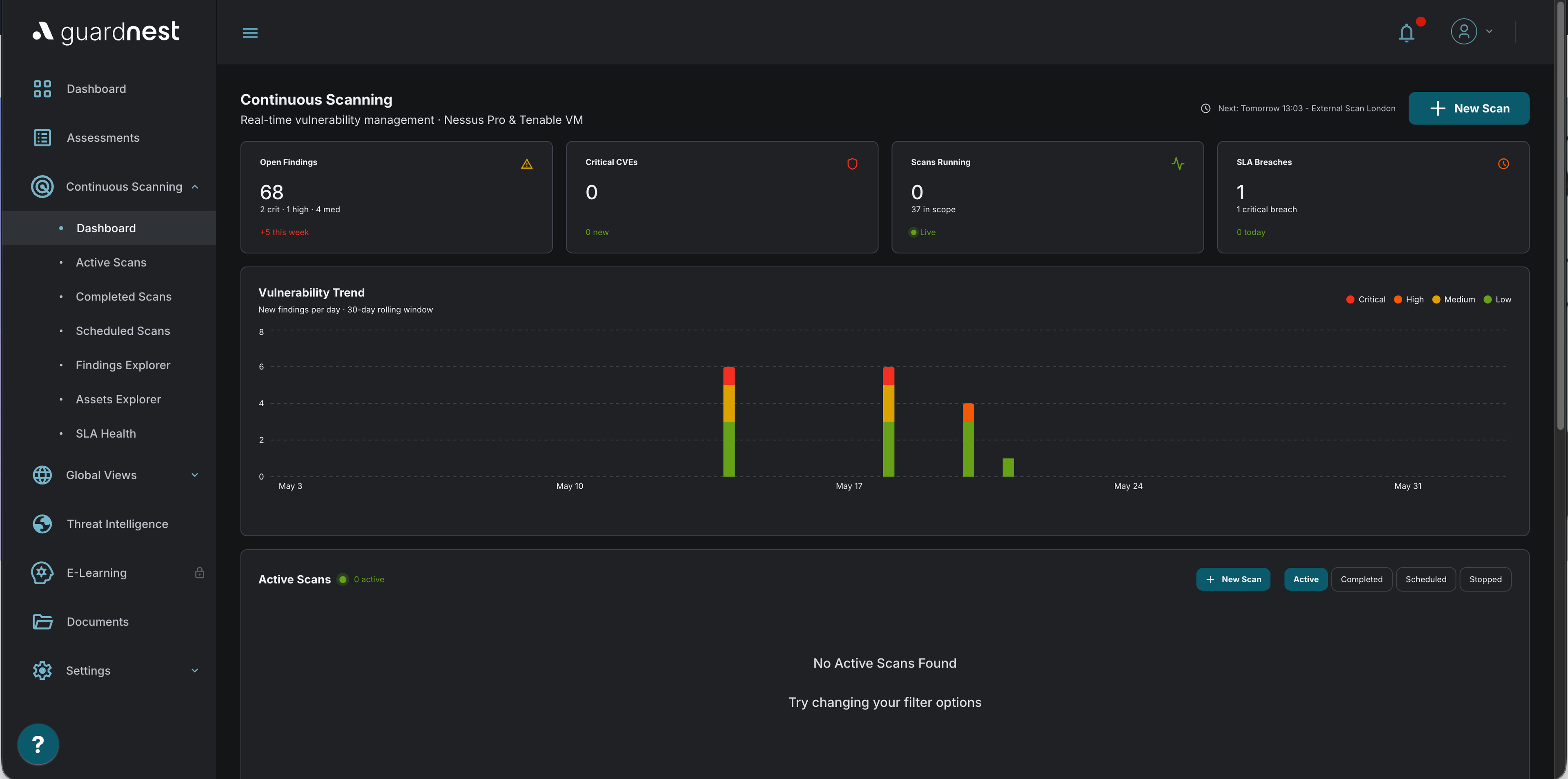
Interactive reporting dashboard
Access clear, visual reporting through GuardNest, making it easy to understand your security posture, track progress and communicate risks to stakeholders.
What you receive with GuardNest

What you receive with GuardNest
What you receive with GuardNest
When you subscribe to our specialist service, you'll receive:
Regular automated vulnerability scans
Continuous monitoring of identified assets
Prioritized vulnerability reporting
Risk-based remediation guidance
Access to the GuardNest dashboard
Historical trend reporting
Speak to our cybersecurity consultants about how Continuous Vulnerability Scanning and GuardNest can help you identify vulnerabilities, prioritize remediation and maintain confidence in your security posture.


What our clients say
We’ve always been very impressed with the cyber security services WorkNest provide us. Their professional approach, knowledge and flexibility have ensured they have become a key trusted partner in our supply chain.

Paymentsense
Founder
WorkNest Secure delivered a highly professional and thorough incident response service. Their team’s technical knowledge, attention to detail, and clear communication throughout the process made a complex area easy to navigate. The quality of the analysis and final reporting gave us real assurance and added value to our internal security efforts, minimising the impact to the business.
Shoezone
Head of IT
FAQs
Continuous vulnerability scanning is the ongoing process of automatically assessing your networks, systems, applications, and devices for known security weaknesses. Rather than conducting a one-off check, continuous scanning provides regular visibility into your security posture, helping organizations identify and address vulnerabilities as they emerge.
Vulnerability scanning uses automated tools to identify known security weaknesses across your environment. It provides broad coverage and can be performed frequently.
Penetration testing, on the other hand, is a manual, expert-led assessment that simulates real-world cyber attacks to determine whether vulnerabilities can be exploited and what impact a successful attack could have. Vulnerability scanning identifies potential issues; penetration testing demonstrates actual risk.
The frequency depends on your organization's risk profile and compliance requirements, but best practice is to perform vulnerability scans at least monthly. Many organizations scan weekly or continuously, particularly for internet-facing systems. Additional scans should also be conducted after significant changes to infrastructure, applications, or network configurations.
Vulnerability scanning can identify a wide range of known security weaknesses, including:
Missing security patches and outdated software
Misconfigured systems and services
Weak encryption protocols
Exposed ports and services
Known software vulnerabilities (CVEs)
Insecure network configurations
Weak passwords and authentication issues (where supported)
The exact findings will depend on the scope and capabilities of the scanning solution used.
External vulnerability scanning assesses internet-facing systems from an outside perspective, identifying weaknesses that could be exploited by external attackers.
Internal vulnerability scanning is performed within the network and identifies vulnerabilities that could be exploited by an attacker who has already gained access, or by malicious insiders. Both types of scanning are important as they provide different perspectives on your security posture.
Vulnerability scanning itself does not prevent cyber attacks. However, it plays a critical role in reducing risk by identifying security weaknesses before attackers can exploit them. When combined with timely remediation, patch management, monitoring, and other security controls, vulnerability scanning significantly strengthens an organization's defenses.
Once vulnerabilities are identified, they should be reviewed, prioritized, and remediated based on their severity and potential business impact.
Typical remediation actions include:
Applying security patches and updates
Correcting configuration issues
Removing unsupported software
Strengthening access controls
Disabling unnecessary services
After remediation, organizations should conduct follow-up scans to verify that vulnerabilities have been successfully addressed and that no new issues have been introduced.
A vulnerability scan uses automated tools to identify known security weaknesses, such as missing patches, misconfigurations, and outdated software.
A penetration test is a manual assessment carried out by security experts who attempt to exploit vulnerabilities to determine the real-world impact of an attack.
In short, vulnerability scanning identifies potential weaknesses, while penetration testing shows how those weaknesses could be exploited by an attacker. Both play an important role in a strong cybersecurity strategy, and many organizations use both services as part of a comprehensive security program.