





Blog
To Find the Gaps That Matter, Pair Automated PTaaS with Human-Led Pen Testing
PTaaS has made penetration testing more accessible for growing companies. Automated pen tests can help teams move quickly, test against known vulnerabilities, and identify common security gaps without the cost or complexity of a larger consulting engagement.
For smaller businesses with simpler systems and fewer compliance pressures, that may be enough. It can also work for teams that already have the in-house expertise to validate findings, prioritize fixes, and move remediation forward.
But as companies grow, expectations change. Customers, auditors, insurers, and partners want more than a list of findings. They want evidence that risks are understood, prioritized, and being addressed.
Pairing PTaaS with human-led pen testing gives teams a faster way to find known issues and a deeper way to understand them. Automation accelerates discovery, while experienced testers validate risk, explore less obvious attack paths, and show which findings matter most.
Automation finds key signals. Expert-led testing completes the picture.
The difference shows up in how the test is carried out. Automated PTaaS can provide a useful first pass by checking systems against known vulnerabilities and common configuration issues. From there, experienced testers can decide where to dig deeper.
That might mean testing whether an access-control issue actually exposes sensitive data, checking whether an authentication weakness could lead to account takeover, or seeing whether a cloud misconfiguration could be combined with exposed credentials. It could also mean reviewing the logic of an application, where the issue isn’t a missing patch but the way users, permissions, payments, files, or data flows are handled.
This is where a human-led penetration testing methodology becomes especially useful. Instead of treating every finding as a standalone item, testers look at how the environment works as a whole. They can separate theoretical issues from practical risk, identify the paths attackers would be most likely to use, and explain what the business should do next.
For companies comparing manual vs. automated penetration testing, the answer usually isn’t “either/or.” The better model uses automation to move quickly and human expertise to test, uncover, and validate issues holistically.
Expert-led penetration testing adds attacker thinking
Experienced pen testers look at systems the way an attacker would: as starting points, not isolated issues.
Real-world attacks rarely follow a neat checklist. A misconfiguration, weak permission, or exposed credential may not look critical on its own. But combined with another weakness, it could create a path to sensitive data, account takeover, privilege escalation, or lateral movement.
That attacker mindset makes PTaaS findings more useful. It helps teams understand not only what was found, but how an attacker might use it, how serious the risk really is, and which fixes should move to the top of the list.
What is the best penetration testing methodology?
The best penetration testing methodology is the one that fits your environment, risk level, compliance goals, and business priorities. A web application launch, cloud migration, and SOC 2 readiness effort don’t need the exact same test.
Still, a strong penetration testing methodology should follow recognized frameworks and industry practices and include:
Clear scoping
Information gathering
Vulnerability analysis
Exploitation
Severity assessment
Reporting, including prioritization
Remediation guidance
Retesting
For example, the penetration testing process should start with a clear understanding of what will be tested and why. Are you testing a web application before launch? Preparing for a SOC 2 audit? Validating cloud security after a migration? Responding to a customer requirement? Each scenario changes the scope.
From there, testers gather information, identify possible weaknesses, validate which issues are exploitable, and assess business impact, then report findings with clear priorities and remediation guidance.
If you’re still researching penetration testing basics, this structure is a useful way to evaluate vendors.
What should you expect during a penetration test?
A good penetration test starts with scoping. This defines what will be tested, the timing, and the deliverables.
Next comes active testing. This may include automated checks, manual enumeration, vulnerability validation, exploitation attempts, and deeper analysis by the testing team. In a hybrid model, automation accelerates repeatable parts of the process while expert consultants investigate the issues that need context.
Reporting should turn the results into a clear action plan. A useful report doesn’t just list findings. It explains what was found, how serious each issue is, which fixes should come first, and how the results may affect security, compliance, customers, or insurance requirements.
Finally, there should be remediation support and validation. Fixing the issue is the outcome that matters. Retesting confirms whether the fix worked.
Should businesses automate penetration testing?
For SMBs and SMEs, automated penetration testing can make security testing more accessible by reducing manual effort, speeding up known vulnerability checks, and giving lean teams a clearer starting point.
That may be enough for smaller businesses with simpler systems and fewer outside security requirements. But when a pen test needs to support a SOC 2 audit, an ISO 27001 program, a cyber insurance application, an enterprise customer review, or testing for a business-critical app, the results need to go further. Teams need to know which findings are exploitable, which fixes should come first, and what evidence shows the issue has been addressed.
That’s why automation works best as part of a hybrid penetration testing process. Paired with human-led testing, it gives teams a practical path from findings to prioritized fixes, clearer reporting, and stronger proof of progress.
Why automated scans plus expert-led testing fits SMB needs
Growing companies need security testing that matches how they operate. Automated PTaaS helps teams test efficiently and identify known vulnerabilities. Human-led testing adds the expertise to validate risk, explore less obvious attack paths, and connect findings to business priorities, compliance needs, and customer expectations.
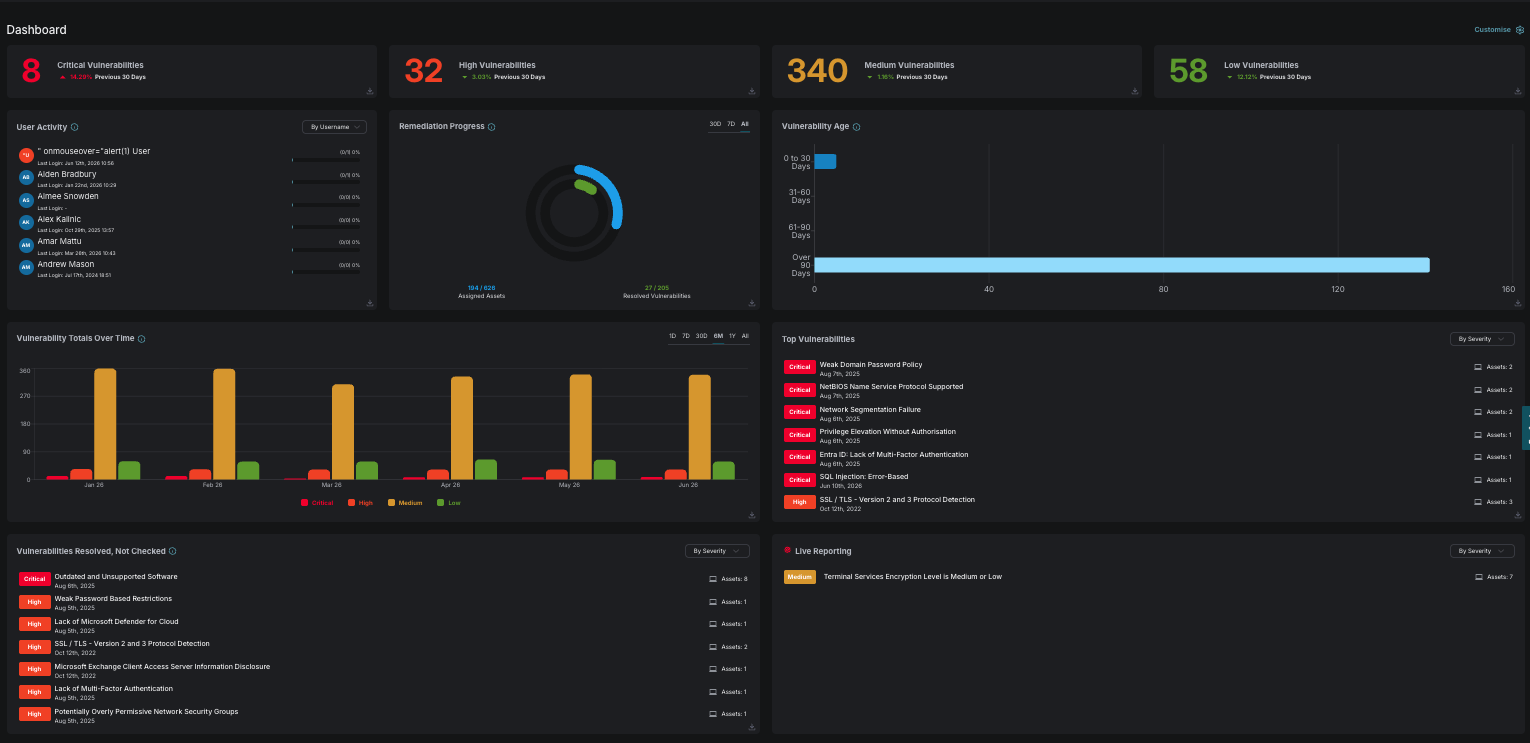
WorkNest’s penetration testing services are built around this hybrid approach. Expert-led testing helps teams understand which findings matter most, while the GuardNest exposure management platform provides ongoing visibility, remediation tracking, and reporting support after the test. With a six-month retest, included in many of WorkNest’s pen testing plans, teams can confirm that key fixes continue to work beyond the initial assessment. The result is that growing businesses can move from security gaps to prioritized fixes and verified progress.
Learn how WorkNest can help your business find vulnerabilities, fix issues faster, and stay audit-ready and compliant.
Why teams love us
From robust threat defence to dependable regulatory assurance, our cybersecurity service helps organisations stay resilient, safeguard their data, and concentrate on what truly drives their success.

We’ve always been very impressed with the cyber security services WorkNest provide us. Their professional approach, knowledge and flexibility have ensured they have become a key trusted partner in our supply chain.

Paymentsense
Founder
WorkNest Secure delivered a highly professional and thorough incident response service. Their team’s technical knowledge, attention to detail, and clear communication throughout the process made a complex area easy to navigate. The quality of the analysis and final reporting gave us real assurance and added value to our internal security efforts, minimising the impact to the business.
Shoezone
Head of IT
WorkNest Secure perform Web Application and Infrastructure Penetration Testing for Pharmacy2U. They are always professional to engage with, provide an excellent level of service, and the addition of GuardNest makes receiving and interrogating the results of the service very easy indeed.
We look forward to working with them in the future and trust the work they deliver.
Pharmacy2U
Founder
WorkNest Secure stand out in the field of penetration testing due to the skillset of people they have working there. We undertook a complex bespoke pentest with them, which required a lot of pre-work in order to make sure it was scoped correctly, and they took the time to come onsite to make sure all was correct prior to commencing.
From my experience with them, they are very intelligent people with a deep understanding of the security landscape, and we will continue to use them for future testing requirements.
Interactive Investor
Information Security Manager