





Blog
What Is Penetration Testing and Why Do SMBs Need It for SOC 2 & ISO 27001?
Most SMB leaders do not set out to build a formal security program. They build products, serve customers, and rely on IT to keep the business running and safe. But as the company grows, it’s no longer enough to say that systems are protected. Customers, auditors, insurers, and partners increasingly want proof.
That proof often comes through SOC 2 or ISO 27001. SOC 2 helps service providers show customers that security controls are in place to protect systems and data. ISO 27001 helps organizations build and maintain a formal information security management system. Both can support customer trust, contract requirements, cyber insurance, and stronger operational discipline.
But compliance is not the same as security. Policies can describe how controls should work. Penetration testing helps show whether those controls hold up under real-world conditions.
What is Penetration Testing?
A practical penetration testing definition is simple: it is a controlled, authorized simulation of a cyberattack used to find and validate security weaknesses before attackers can exploit them.
Unlike a basic, automated vulnerability scan, a penetration test does not simply list potential issues. Skilled testers assess whether an attacker could access sensitive data, bypass controls, disrupt services, or move deeper into the environment.
This matters for SMBs because security and compliance responsibilities often overlap. IT may own technical controls, while audit and compliance requests may involve operations, legal, finance, or leadership. Penetration testing gives those stakeholders a shared view of risk: what was tested, what was found, and what needs fixing. All of this leads to proof of compliance to customers, auditors, and insurers.
Why Do SMBs Need Penetration Testing?
Penetration testing turns abstract risk into specific findings. Instead of asking “Are we secure?” leadership can ask better questions: Which vulnerabilities could affect customer data? Which issues could delay an audit? Which fixes should come first?
It also helps SMBs avoid overreliance on automated tools. Automated scanning can support ongoing visibility, but it is not a substitute for expert-led testing. Skilled testers can identify complex vulnerabilities, business logic flaws, misconfigurations, access control issues, and risks that only become clear in context.
For growing businesses, understanding penetration testing helps connect technical findings to business, customer, audit, and insurance risk. That is especially important when security evidence is needed for SOC 2, ISO 27001, cyber insurance, or customer assurance.
Does SOC 2 Type 2 Require Penetration Testing?
First, a quick definition: SOC 2 is a report that helps service providers show customers they have controls in place to protect systems and data. A Type 1 report looks at whether those controls are designed properly at a specific point in time. A Type 2 report looks at whether they operate effectively over a period of time, usually several months.
Penetration testing is not always a universal SOC 2 requirement. But if your audit includes controls for vulnerability management, access control, system monitoring, or risk management, a penetration test can help show that those controls are working in practice.
That evidence can be especially useful for SaaS companies, technology providers, healthcare vendors, financial services vendors, and other businesses that handle sensitive customer data. A well-scoped test can reduce audit friction and give customers more confidence that your security program is more than policy documentation.
How Does Penetration Testing Support ISO 27001?
For leaders asking about the mandatory framework requirements for ISO 27001, the practical answer is that ISO 27001 requires a risk-based approach to information security. The organization must define what is in scope, assess information security risks, decide how those risks will be treated, document the controls it uses, monitor performance, conduct internal audits, and review the program with leadership.
The framework also includes a reference list of security controls, known as Annex A. These controls cover areas such as access control, supplier management, incident response, business continuity, and secure technology use. Not every Annex A control applies to every organization. What matters is whether the business has assessed its risks, selected the right controls, explained any exclusions, and can show that its information security management system is working.
Penetration testing supports ISO 27001 compliance by validating whether technical controls are effective. It can also support ISO 27001 annual compliance steps, such as risk reviews, internal audits, management reviews, and certification maintenance.
For SMBs, that evidence helps show whether controls are still working as systems, vendors, and risks change. Pen testing gives the organization evidence that technical controls are working, or clear direction where improvement is needed.
Penetration Testing Best Practices and Checklist for SOC 2 & ISO 27001 Compliance
Strong penetration testing best practices start with defining the scope. A test should reflect the systems, applications, APIs, networks, cloud environments, and user roles that matter most to customers, auditors, and business operations.
It should also align with compliance goals. For SOC 2, testing should support relevant controls around security, availability, confidentiality, or privacy. For ISO 27001, testing should connect to risk treatment, control validation, and ongoing improvement.
Use this penetration testing checklist to keep the engagement focused:
Confirm the business driver: SOC 2, ISO 27001, cyber insurance, customer requirements, or general risk reduction.
Define the assets in scope, including applications, APIs, networks, cloud environments, and sensitive systems.
Connect testing to audit evidence, risk management, and relevant controls.
Agree on timing, access, credentials, exclusions, and escalation contacts.
Prioritize remediation based on business, customer, and audit risk.
Choose an expert-led provider that can explain findings clearly, support remediation, and help maintain visibility after the test.
Timing also matters. Testing should happen early enough to allow remediation, retesting, and evidence collection before an audit or customer review.
How WorkNest Helps SMBs Find, Fix, And Prove Progress
WorkNest’s expert-led penetration testing delivers more than a generic scan or static PDF report. Testing is tailored to the environment and designed to help SMBs understand which vulnerabilities matter most.
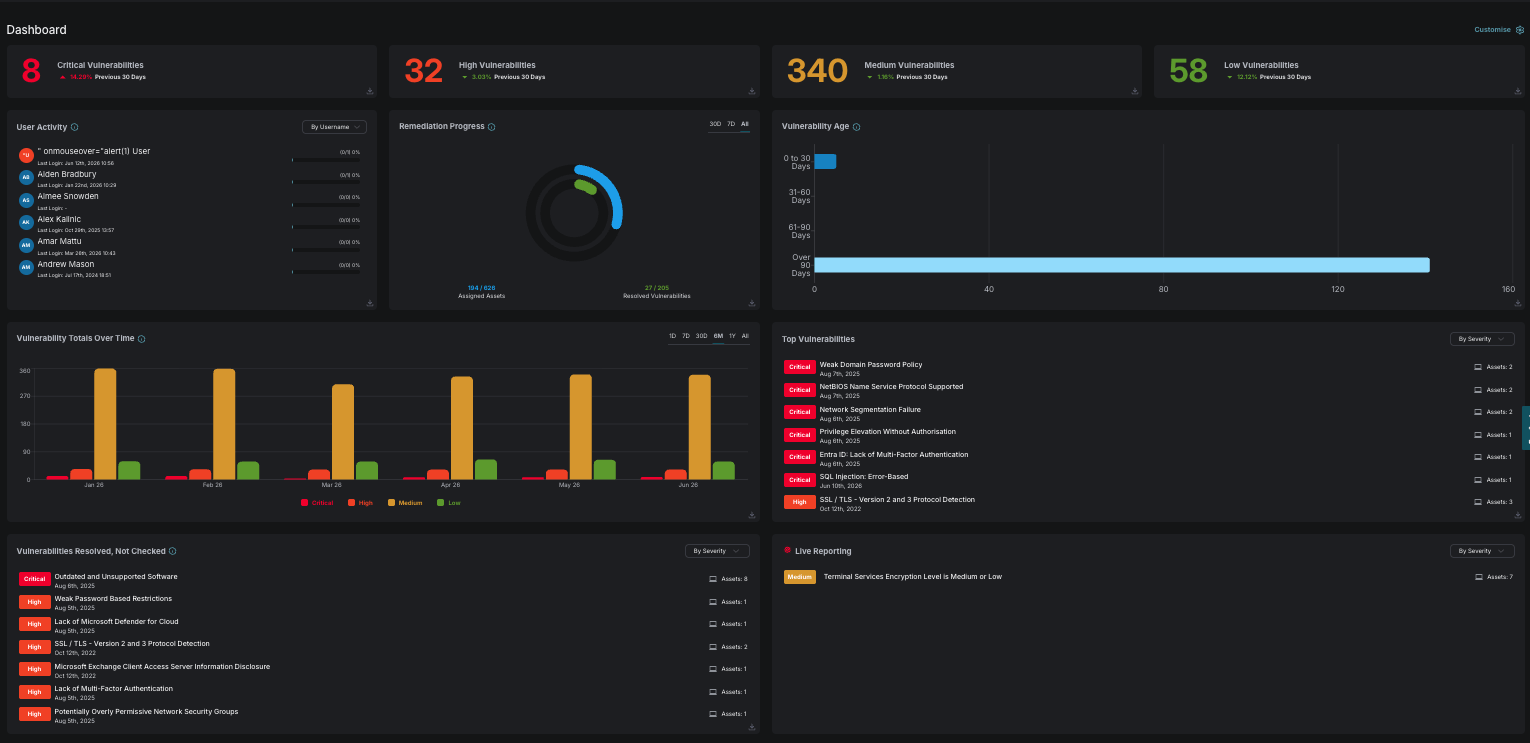
With GuardNest, WorkNest also gives teams visibility, remediation tracking, ongoing external scanning, and access to expert advice. That helps businesses fix issues faster, monitor risk between tests, and maintain evidence for SOC 2, ISO 27001, and other assurance requirements.
Talk to WorkNest about expert-led penetration testing for SOC 2, ISO 27001, and customer assurance.
Why teams love us
From robust threat defence to dependable regulatory assurance, our cybersecurity service helps organisations stay resilient, safeguard their data, and concentrate on what truly drives their success.

We’ve always been very impressed with the cyber security services WorkNest provide us. Their professional approach, knowledge and flexibility have ensured they have become a key trusted partner in our supply chain.

Paymentsense
Founder
WorkNest Secure delivered a highly professional and thorough incident response service. Their team’s technical knowledge, attention to detail, and clear communication throughout the process made a complex area easy to navigate. The quality of the analysis and final reporting gave us real assurance and added value to our internal security efforts, minimising the impact to the business.
Shoezone
Head of IT
WorkNest Secure perform Web Application and Infrastructure Penetration Testing for Pharmacy2U. They are always professional to engage with, provide an excellent level of service, and the addition of GuardNest makes receiving and interrogating the results of the service very easy indeed.
We look forward to working with them in the future and trust the work they deliver.
Pharmacy2U
Founder
WorkNest Secure stand out in the field of penetration testing due to the skillset of people they have working there. We undertook a complex bespoke pentest with them, which required a lot of pre-work in order to make sure it was scoped correctly, and they took the time to come onsite to make sure all was correct prior to commencing.
From my experience with them, they are very intelligent people with a deep understanding of the security landscape, and we will continue to use them for future testing requirements.
Interactive Investor
Information Security Manager