





Blog
Internal vs External Pen Testing: What SMBs Need for Compliance Readiness
Penetration testing helps SMBs identify security gaps, prepare for audits, and meet customer or cyber insurance requirements. But not every penetration test examines the same risks.
External pen testing looks for ways an attacker could gain access through internet-facing systems. Internal pen testing reveals what could happen after access is gained, including whether the attacker could move across the network, gain additional privileges, or reach sensitive data. Testing only one side of the attack path can leave important weaknesses undiscovered.
Those risks aren’t just theoretical. The 2026 Verizon Data Breach Investigations Report found that vulnerability exploitation was the leading initial access method, accounting for 31% of breaches, while credential abuse accounted for another 13%.
The right approach to pen testing depends on your environment, compliance obligations, and whether you need one or more tests. Here’s what to look for.
What does each type of pen test tell you?
External pen testing can show:
Which internet-facing systems could provide a way into the business
Whether exposed applications, services, or cloud environments can be exploited
Where weak authentication, outdated software, or misconfigurations create immediate risk
Internal pen testing can show:
How far an attacker could move after compromising an account or device
Whether access controls and network segmentation can contain the attack
Which sensitive systems, data, or privileges could be reached from an initial foothold
Automated and expert-led techniques can be used in both types of testing. Automated tests identify potential weaknesses, while expert-led testing validates whether they can be exploited or connected. Together, they provide broader coverage and deeper validation.
What can external pen testing uncover?
External penetration testing focuses on the systems an attacker can reach from the internet. That may include your websites, web applications, APIs, VPNs, cloud services, firewalls, and other public-facing infrastructure.
Testers look for weaknesses such as outdated software, exposed services, authentication gaps, and configuration errors that could provide a way into the business. For an SMB with a relatively small external attack surface, this may be the right starting point. It can also address a specific customer, insurer, or compliance request focused on internet-facing systems.
The limitation is what happens after access is gained. An external test may identify a way in without showing how far an attacker could move once inside.
What can internal pen testing reveal?
Internal penetration testing starts from the assumption that an attacker has already gained a foothold through a compromised account, infected device, or unauthorized network connection. The test then examines whether existing controls can limit what happens next.
A tester may look at Active Directory, access permissions, employee devices, databases, and network segmentation to see whether the attacker could gain higher privileges, move between systems, or reach sensitive information. For example, one compromised user account might expose weak permissions that provide access to a shared server, which then creates a path to more critical systems.
Internal testing is especially valuable after rapid growth, a cloud migration, an acquisition, a network redesign, or expanded remote access, when new connections can create gaps between systems and controls.
When should SMBs use both types of pen testing?
External and internal testing aren’t competing choices. For some SMBs, testing only one side of the attack path can leave important risks unexamined.
In one CISA red-team assessment, for example, access to a public-facing server led to broader compromise through excessive privileges, exposed credentials, and insufficient network segmentation.
SMBs should consider using both approaches when:
Preparing for a broader compliance, customer, or cyber insurance review
Protecting sensitive systems that could be reached from a compromised account or device
Validating controls after a cloud migration, acquisition, network redesign, or other major IT change
Not every system needs the same testing depth or frequency. Start with the systems that handle sensitive data, support critical operations, or fall within the scope of an audit. That risk-based approach can help you get the evidence you need without testing more than your business requires.
How does penetration testing support compliance readiness?
Compliance readiness requires evidence that the right systems were tested, findings were prioritized, and identified risks were addressed. A well-scoped pen test can help you:
Validate that relevant security controls work as intended
Prioritize vulnerabilities by severity and business impact
Document remediation and verify that fixes were effective
The evidence that’s compiled can support readiness for SOC 2, ISO 27001, GDPR-related security obligations, customer reviews, and cyber insurance assessments. The exact requirements will vary, so the goal is not simply to produce a report. It is to demonstrate a repeatable process for identifying risk, correcting weaknesses, and proving that those issues have been addressed.
How should you choose a penetration testing service for compliance readiness?
Start with the scope. A provider should understand your environment, compliance goals, and highest-risk systems before recommending internal testing, external testing, or both. A standard package may leave important systems or attack paths untested.
You should also look for a provider that:
Combines automated discovery with expert-led validation
Explains how findings relate to your controls and compliance requirements
Prioritizes issues by business impact, not technical severity alone
Provides practical remediation guidance your team can act on
Makes it easy to document progress and verify that fixes worked
Tracks remediation, supports your team, and verifies that priority fixes worked
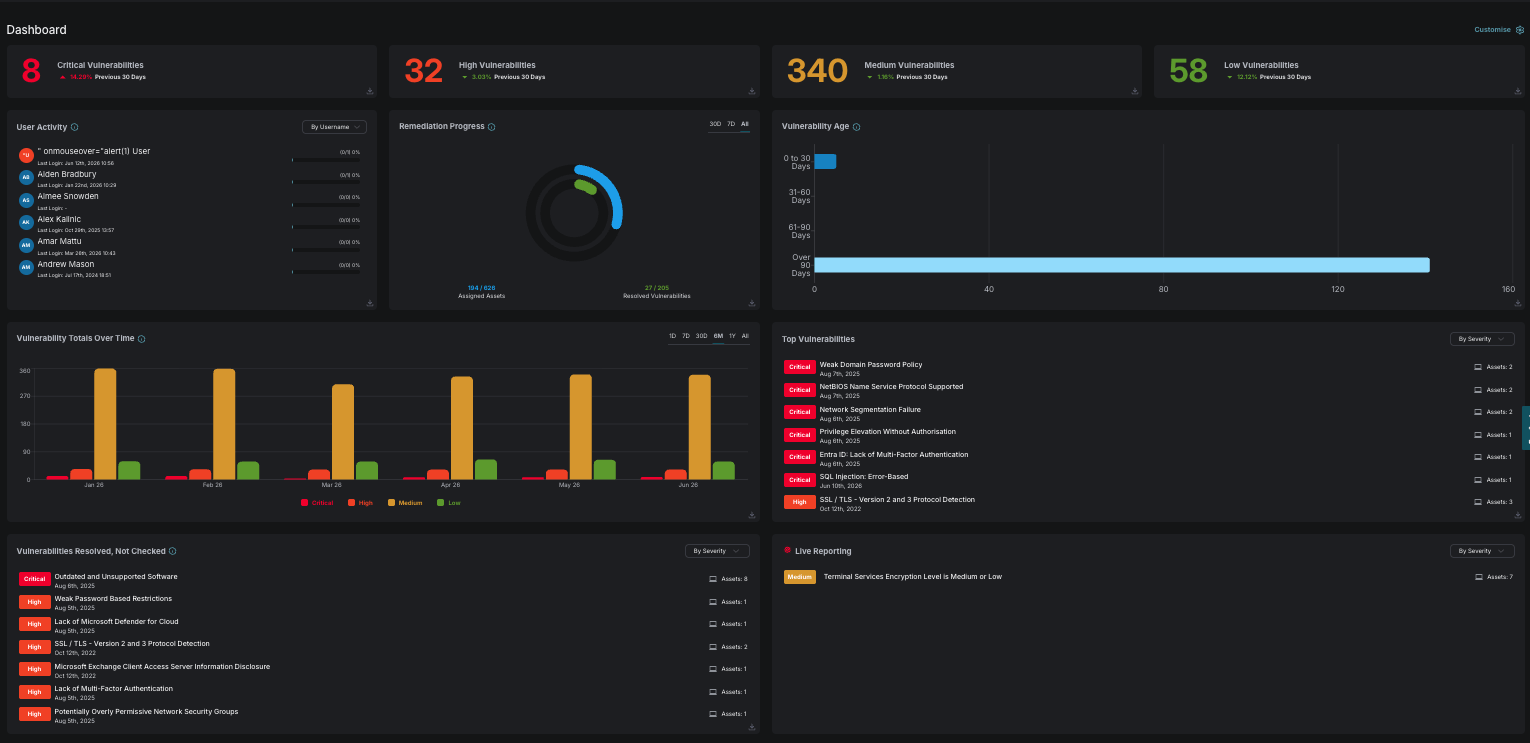
WorkNest tailors internal, external, and combined testing to your environment and compliance goals. Our GuardNest platform centralizes findings, remediation tracking, and reporting, while continuous external scanning helps you monitor new issues between assessments. Every pen test engagement also includes a six-month retest to validate that priority fixes have been completed.
Scope your pen test for security and compliance
The right scope follows your most important attack paths, focuses on sensitive systems, and produces the evidence you need for compliance.
Before approving a test, make sure the scope answers three questions:
Where could an attacker gain access?
What critical systems or data could they reach from there?
What proof will auditors, customers, or insurers expect to see?
Those answers can help you choose internal testing, external testing, or both, with a scope aligned to your highest risks and compliance requirements.
See how WorkNest can build the right testing plan for your business, help you fix priority issues, and give you clearer evidence of compliance readiness. Talk with a pen testing expert today.
Why teams love us
From robust threat defence to dependable regulatory assurance, our cybersecurity service helps organisations stay resilient, safeguard their data, and concentrate on what truly drives their success.

We’ve always been very impressed with the cyber security services WorkNest provide us. Their professional approach, knowledge and flexibility have ensured they have become a key trusted partner in our supply chain.

Paymentsense
Founder
WorkNest Secure delivered a highly professional and thorough incident response service. Their team’s technical knowledge, attention to detail, and clear communication throughout the process made a complex area easy to navigate. The quality of the analysis and final reporting gave us real assurance and added value to our internal security efforts, minimising the impact to the business.
Shoezone
Head of IT
WorkNest Secure perform Web Application and Infrastructure Penetration Testing for Pharmacy2U. They are always professional to engage with, provide an excellent level of service, and the addition of GuardNest makes receiving and interrogating the results of the service very easy indeed.
We look forward to working with them in the future and trust the work they deliver.
Pharmacy2U
Founder
WorkNest Secure stand out in the field of penetration testing due to the skillset of people they have working there. We undertook a complex bespoke pentest with them, which required a lot of pre-work in order to make sure it was scoped correctly, and they took the time to come onsite to make sure all was correct prior to commencing.
From my experience with them, they are very intelligent people with a deep understanding of the security landscape, and we will continue to use them for future testing requirements.
Interactive Investor
Information Security Manager