





Blog
Cyber Security Awareness in 2026: What's Changed in a Year?
A lot can change in a year, especially when it comes to cybersecurity.
October marks another Cybersecurity Awareness Month, giving businesses an opportunity to reflect on how cyber threats have evolved, what new challenges have emerged, and whether their existing security measures are keeping up.
Think back to 2025. Businesses were already dealing with phishing attacks, ransomware, data breaches, and the growing use of artificial intelligence (AI). Fast forward to 2026, and many of those same challenges remain, but the ways they affect organizations are changing.
Cybercriminals are finding new opportunities to exploit weaknesses, employees are using more digital tools in their everyday roles, and businesses are becoming increasingly dependent on connected systems and third-party providers.
However, not everything has changed. The importance of strong passwords, regular software updates, employee awareness, and proactive security testing is just as relevant today as it was a year ago.
So, what's different in 2026, and what should organizations be paying closer attention to?
1. Phishing Attacks Are Becoming More Convincing
Phishing has been one of the most common cybersecurity threats for years, but the way attackers approach it continues to evolve.
In 2025, businesses were already being warned about increasingly sophisticated phishing campaigns. In 2026, AI tools are making it easier for cybercriminals to create realistic messages, personalize their approach, and target employees through different communication channels.
The obvious warning signs people were once encouraged to look for, such as poor spelling or unusual grammar, are no longer reliable indicators of a phishing attempt.
A fraudulent email could now look almost identical to a legitimate message from a supplier, colleague, or customer.
And phishing isn't limited to email.
Attackers can also use text messages, phone calls, collaboration platforms, and other communication tools to impersonate trusted individuals.
This makes it increasingly important for employees to question unexpected requests, even when they appear genuine.
What should businesses do differently in 2026?
Rather than relying solely on employees recognizing suspicious emails, organizations should build additional checks into everyday processes.
For example:
Verify unexpected payment requests through a separate communication channel.
Encourage employees to report suspicious messages.
Provide regular security awareness training using realistic examples.
Introduce approval processes for requests involving sensitive information or financial transactions.
Test employee awareness through simulated phishing exercises.
The aim isn't to make employees suspicious of every message they receive. It's to help them recognize when something needs a closer look.
2. AI Is Becoming an Everyday Security Consideration
One of the most noticeable changes over the past year has been the growing use of AI across business operations.
From drafting emails and creating content to analyzing information and supporting customer services, AI-powered tools are becoming part of everyday working life.
For many organizations, the conversation has moved beyond whether employees should use AI to how businesses can use it securely.
While AI offers opportunities to improve productivity and efficiency, it also creates questions about data protection, security, and accountability.
Employees may introduce AI tools without approval, upload confidential information into external platforms, or rely on AI-generated responses without checking their accuracy.
Businesses developing their own AI-powered applications also need to understand whether those systems could expose sensitive information or respond in unexpected ways.
What should businesses do differently in 2026?
Organizations should aim to understand how AI is being used across their business rather than assuming employees are only using approved tools.
Some practical steps include:
Establishing clear guidelines for acceptable AI use.
Reviewing the security of AI platforms before introducing them.
Educating employees about sharing sensitive information.
Identifying who is responsible for overseeing AI-related risks.
Testing AI-powered systems to understand potential vulnerabilities.
Good AI security doesn't mean avoiding new technologies. It means understanding the risks and putting appropriate measures in place so businesses can use these tools with greater confidence.
3. Cybercriminals Are Finding and Exploiting Weaknesses Faster
Keeping systems secure has always involved identifying vulnerabilities and applying updates before attackers can exploit them.
However, the speed at which weaknesses can be discovered and targeted is becoming a growing concern.
According to Verizon's 2026 Data Breach Investigations Report, exploitation of software vulnerabilities accounted for 31% of breaches analyzed, overtaking stolen credentials as the leading initial access method.
This highlights how important it is for businesses to understand where weaknesses exist within their systems.
As organizations introduce new applications, cloud services, and connected devices, the number of potential entry points can increase.
A vulnerability that wasn't present during a previous security assessment may appear following a software change, system update, or new deployment.
For organizations relying entirely on occasional checks, this can create gaps in visibility.
What should businesses do differently in 2026?
A more proactive approach to vulnerability management can help organizations identify and address weaknesses before they're exploited.
This includes:
Keeping software and operating systems updated.
Maintaining visibility over business devices and applications.
Regularly reviewing security configurations.
Prioritizing vulnerabilities based on their potential business impact.
Conducting security testing and vulnerability assessments.
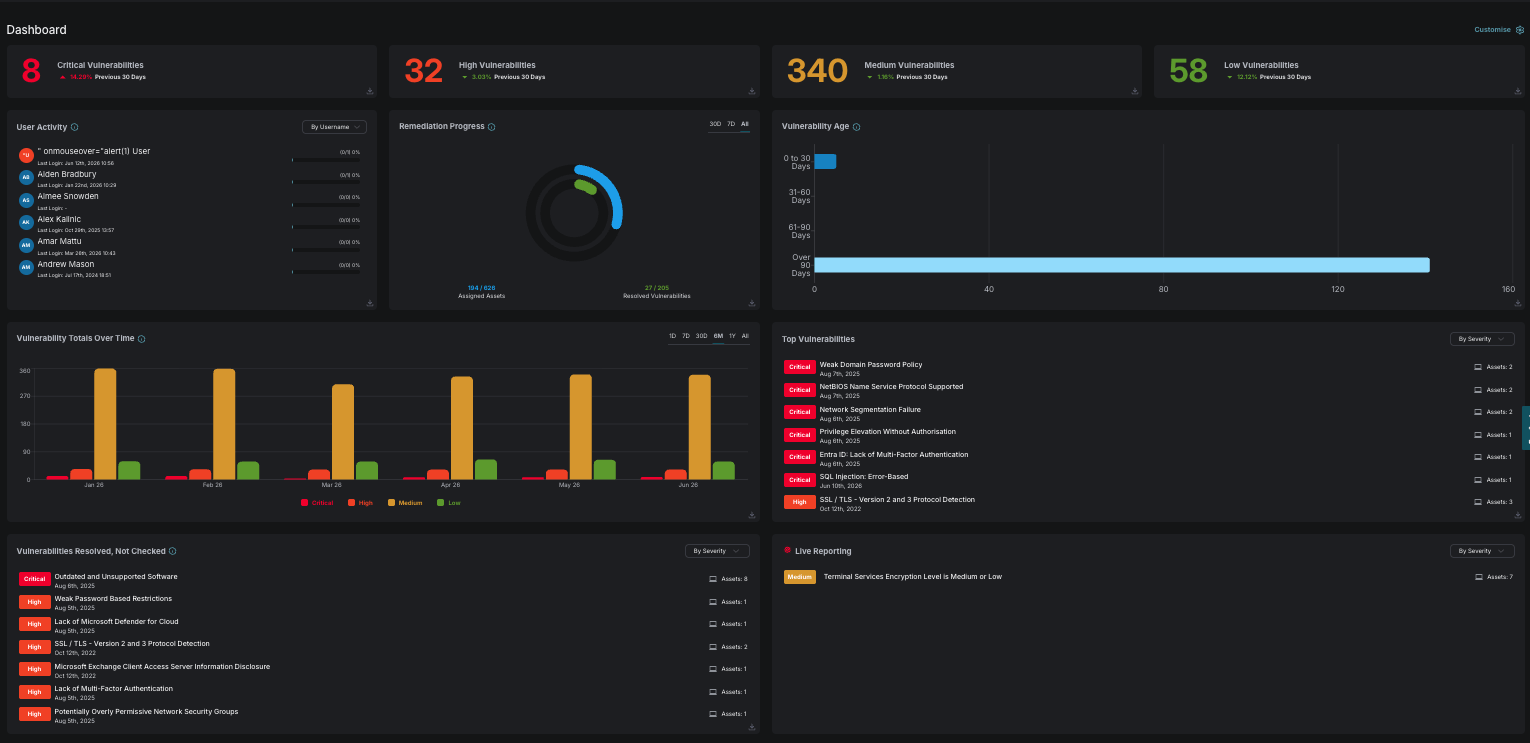
Continuous vulnerability scanning can also help businesses identify emerging weaknesses between scheduled assessments, providing greater visibility as their environments change.
The key difference in 2026 is the need to think about cybersecurity as an ongoing activity rather than something reviewed only once or twice a year.
4. Third-Party Security Is Becoming Harder to Ignore
Most businesses rely on external providers to support their operations.
Whether it's cloud hosting, payment processing, software platforms, or outsourced services, third-party technology is now part of how organizations operate.
While these relationships bring benefits, they can also introduce security risks.
An organization might have strong internal security measures but still be affected by a cyber incident involving one of its suppliers.
The 2026 Verizon Data Breach Investigations Report found that third-party involvement featured in 48% of breaches analyzed, demonstrating the importance of looking beyond internal systems when assessing security risks.
For businesses, this means understanding not only how their own information is protected, but also how external providers handle the data and systems they can access.
What should businesses do differently in 2026?
Third-party security should be part of an organization's wider cybersecurity planning.
Businesses can strengthen their approach by:
Reviewing suppliers' security practices before entering agreements.
Understanding what business information third parties can access.
Limiting unnecessary access to internal systems.
Regularly reviewing supplier permissions and relationships.
Establishing processes for managing incidents involving external providers.
As businesses become more connected, cybersecurity responsibilities increasingly extend beyond their own networks.
5. Cybersecurity Awareness Needs to Go Beyond Annual Training
Cybersecurity awareness training has been a familiar part of business security for years.
However, simply asking employees to complete an annual training course is unlikely to be enough on its own.
The types of threats employees encounter can change throughout the year, and different departments may face different risks.
Finance teams may be targeted by fraudulent payment requests, while customer service teams might encounter attempts to access customer information. Employees using AI tools may face entirely different security considerations.
This means cybersecurity awareness needs to reflect how people actually work.
In 2026, businesses should be thinking less about whether training has been completed and more about whether employees understand how to apply what they've learned.
What should businesses do differently in 2026?
Organizations can create a stronger security culture by making cybersecurity part of everyday conversations.
This could involve:
Sharing regular updates about emerging cyber threats.
Providing practical training tailored to different job roles.
Encouraging employees to report suspicious activity without fear of blame.
Running phishing simulations and other awareness exercises.
Making security guidance easy to access and understand.
Employees shouldn't need to be cybersecurity experts to make better security decisions.
Clear guidance, regular communication, and a supportive reporting culture can all help reduce the likelihood of avoidable mistakes.
6. Cyber Resilience Is Just as Important as Cyber Prevention
Traditionally, cybersecurity conversations have focused heavily on preventing attacks.
And while prevention remains essential, organizations also need to consider what happens if an incident occurs despite their security measures.
A cyberattack could interrupt operations, affect customer services, expose sensitive data, or create financial and reputational consequences.
Being prepared to respond quickly and effectively can make a significant difference to the impact of an incident.
For businesses in 2026, cybersecurity planning should involve both reducing the likelihood of an attack and understanding how to recover if something goes wrong.
This means asking questions such as:
Do we know what to do if a system is compromised?
Can employees recognize and report a potential incident?
Are important business systems backed up appropriately?
Do we know who is responsible for managing a cybersecurity incident?
Have we tested our incident response processes?
Having an incident response plan is an important starting point, but businesses should also review and test that plan regularly.
The more prepared an organization is, the better positioned it will be to respond to unexpected situations.
What Hasn't Changed Since 2025?
Despite the developments we've seen over the past year, many of the most effective cybersecurity practices remain the same.
Strong passwords, multifactor authentication, regular software updates, employee awareness, and security testing continue to play an important role in protecting organizations.
The challenge isn't necessarily that businesses need an entirely different approach to cybersecurity.
Instead, it's recognizing that existing security measures may need to evolve as technology, working practices, and threats change.
A business that had appropriate security controls in place during 2025 shouldn't automatically assume those same controls provide sufficient protection in 2026.
New systems may have been introduced, employees may have changed roles, suppliers may have gained access to business information, and AI tools may now be handling data that wasn't previously shared outside the organization.
Regularly reviewing these changes can help organizations understand where their security practices are working and where improvements may be needed.
As we move through the final months of 2026, Cybersecurity Awareness Month is a useful reminder that building stronger cybersecurity doesn't always require complicated changes.
For many organizations, the priority should be gaining a clearer understanding of their existing risks and making sure security measures reflect how the business operates today.
That means focusing on a few important areas:
Visibility: Understand what systems, applications, and AI tools are being used across the organization.
Awareness: Make sure employees recognize current threats and understand their responsibilities.
Prevention: Keep security controls, software, and access permissions regularly updated.
Testing: Identify vulnerabilities and check whether existing security measures are effective.
Preparedness: Have clear processes in place for responding to potential incidents.
Rather than trying to address every possible risk at once, businesses should prioritize the weaknesses most likely to affect their operations, information, and customers.
Taking consistent, practical steps can help build a stronger cybersecurity position over time.
Conclusion: A Year of Change, but the Foundations Still Matter
Cybersecurity in 2026 looks different from a year ago, but not because the threats businesses have always faced have disappeared.
Phishing, ransomware, software vulnerabilities, and data breaches remain familiar concerns. What's changing is how these threats develop, how quickly attackers can act, and the growing number of technologies businesses need to protect.
AI is also adding another layer to the conversation, creating opportunities for organizations while introducing risks that require additional attention.
This Cybersecurity Awareness Month, our theme, The Good, The Bad, The AI, is a reminder that staying secure means understanding both the opportunities and challenges that come with an increasingly digital workplace.
At WorkNest Secure, we help organizations identify and address security weaknesses through services such as Penetration Testing, Continuous Vulnerability Scanning, and LLM Security Assessments.
As cyber threats continue to evolve, understanding where your business could be exposed is an important first step toward improving your security.
Discover how WorkNest Secure's Continuous Vulnerability Scanning can help your organization identify emerging weaknesses and strengthen its cybersecurity approach.
If you're an existing GuardNest customer, the Continuous Scanning dashboard is live on your account now. Log in to see it, configure your SLA settings and walk through the updated workflows.
If you're new to GuardNest, book a demo and we'll show you how Continuous Scanning works against the targets that matter to you.
Why teams love us
From robust threat defence to dependable regulatory assurance, our cybersecurity service helps organisations stay resilient, safeguard their data, and concentrate on what truly drives their success.

We’ve always been very impressed with the cyber security services WorkNest provide us. Their professional approach, knowledge and flexibility have ensured they have become a key trusted partner in our supply chain.

Paymentsense
Founder
WorkNest Secure delivered a highly professional and thorough incident response service. Their team’s technical knowledge, attention to detail, and clear communication throughout the process made a complex area easy to navigate. The quality of the analysis and final reporting gave us real assurance and added value to our internal security efforts, minimising the impact to the business.
Shoezone
Head of IT
WorkNest Secure perform Web Application and Infrastructure Penetration Testing for Pharmacy2U. They are always professional to engage with, provide an excellent level of service, and the addition of GuardNest makes receiving and interrogating the results of the service very easy indeed.
We look forward to working with them in the future and trust the work they deliver.
Pharmacy2U
Founder
WorkNest Secure stand out in the field of penetration testing due to the skillset of people they have working there. We undertook a complex bespoke pentest with them, which required a lot of pre-work in order to make sure it was scoped correctly, and they took the time to come onsite to make sure all was correct prior to commencing.
From my experience with them, they are very intelligent people with a deep understanding of the security landscape, and we will continue to use them for future testing requirements.
Interactive Investor
Information Security Manager