





Blog
Beyond Penetration Testing: How to Close the Security Gap
A penetration test can reveal weaknesses in your organization's security. But how do you stay protected when new vulnerabilities emerge after the test is complete?
For many businesses, penetration testing is an essential part of their cybersecurity strategy. It helps identify vulnerabilities, assess potential threats, and understand how attackers could gain access to systems or sensitive information.
However, passing a security assessment doesn't mean your business will remain secure for the next 12 months.
Technology changes, new vulnerabilities are discovered, and cyber threats continue to evolve. What was considered secure during your last penetration test may no longer be secure a few months later.
This creates what we call the security gap: the period between security assessments when new vulnerabilities can develop without being identified or addressed.
For businesses looking to improve their cybersecurity, understanding this gap is an important step toward moving from periodic testing to more consistent security management.
What is the security gap?
Consider a business that completes its annual penetration test in February.
The assessment identifies several weaknesses, the IT team works through the findings, and the business makes the necessary improvements.
At that point, the organization has a clearer understanding of its security risks.
But what happens six months later?
Since the assessment, the business may have introduced new cloud applications, updated software, added employees, or changed its IT infrastructure.
Each of these changes has the potential to introduce vulnerabilities that weren't present during the original assessment.
If the next penetration test isn't scheduled until February of the following year, some of these weaknesses could remain undetected for months.
The security gap is the difference between what your business knew about its security during the last assessment and the risks that may have emerged since.
The issue isn't that penetration testing is ineffective. It's that a single assessment cannot provide complete visibility into an IT environment that continues to change.
Why penetration testing remains essential
Penetration testing is still one of the most valuable ways for organizations to assess their cybersecurity defenses.
Unlike automated vulnerability scanning, which identifies known weaknesses, penetration testing uses skilled security professionals to simulate real-world attack techniques.
This helps businesses understand not only where vulnerabilities exist, but also how they could be exploited and what the potential consequences might be.
A penetration test can help your organization:
Find vulnerabilities that automated tools may miss: Identify weaknesses in applications, networks, systems, and security configurations.
Understand potential business impact: See how an attacker could exploit vulnerabilities to access information or compromise critical systems.
Prioritize security improvements: Focus resources on weaknesses that present the greatest risk.
Support compliance requirements: Provide evidence of security testing for frameworks and requirements such as SOC 2, PCI DSS, and applicable industry standards.
Validate existing security controls: Understand whether your defenses are performing as expected.
For businesses preparing for customer security reviews, compliance audits, or new contracts, penetration testing can also help demonstrate a commitment to cybersecurity.
However, the findings are most valuable when they lead to meaningful improvements rather than simply becoming another completed assessment.
The problem with relying on annual penetration testing
Cybersecurity isn't something businesses can assess once and then forget about until the following year.
Even organizations with strong security practices can experience changes that introduce new risks.
There are three key reasons why penetration testing alone may not provide the ongoing protection businesses need.
1. Cyber threats don't follow your testing schedule
New software vulnerabilities are discovered regularly, and attackers are constantly looking for opportunities to exploit them.
A system that passed a penetration test earlier in the year could become vulnerable following a newly disclosed software flaw.
Without regular scanning and vulnerability monitoring, organizations may have limited visibility into these weaknesses until their next assessment.
This can create unnecessary exposure, particularly when attackers begin exploiting newly discovered vulnerabilities.
2. Business technology is constantly evolving
Modern businesses rely on a combination of cloud services, applications, connected devices, and third-party platforms.
These environments rarely stay the same for long.
Software updates, infrastructure changes, new applications, and adjustments to user permissions can all affect an organization's security.
Even relatively small changes, such as an incorrectly configured cloud service or an exposed application, can introduce risks.
Regular security assessments remain important, but businesses also need a way to identify potential vulnerabilities as their environments change.
3. Finding vulnerabilities doesn't mean they've been fixed
Identifying security weaknesses is only the first step.
Once a vulnerability has been discovered, businesses need to understand its severity, assign responsibility, implement the necessary fixes, and verify that the issue has been resolved.
Without clear ownership and remediation processes, vulnerabilities can remain outstanding long after they were first identified.
For organizations managing multiple systems or working across different IT teams, this can quickly become difficult to track.
The goal shouldn't simply be to identify vulnerabilities. It should be to understand, prioritize, and address them before they create bigger problems.
How continuous vulnerability scanning helps close the security gap
One way to reduce the security gap is by combining penetration testing with continuous vulnerability scanning.
While penetration testing provides a detailed assessment of how weaknesses could be exploited, continuous vulnerability scanning helps businesses maintain more regular visibility into known vulnerabilities across their systems.
Rather than waiting for the next penetration test, automated scans can help identify new weaknesses as they appear.
Continuous vulnerability scanning can help businesses:
Detect newly introduced vulnerabilities between penetration tests.
Identify outdated software and potential security misconfigurations.
Improve visibility across networks, applications, and internet-facing systems.
Prioritize vulnerabilities according to their severity and potential business impact.
Monitor remediation progress and identify outstanding security issues.
This creates a more proactive approach to cybersecurity, allowing teams to respond to newly identified risks without relying exclusively on periodic assessments.
However, continuous scanning isn't a replacement for penetration testing.
Automated scanning is useful for identifying known vulnerabilities, but it cannot replicate the expertise and contextual analysis provided by experienced penetration testers.
The strongest approach combines the depth of penetration testing with the ongoing visibility of continuous vulnerability scanning.
How GuardNest helps businesses manage security risks
Knowing that vulnerabilities exist is important. Having the right tools and processes to manage them is equally valuable.
That's where WorkNest Secure's GuardNest vulnerability management platform can help.
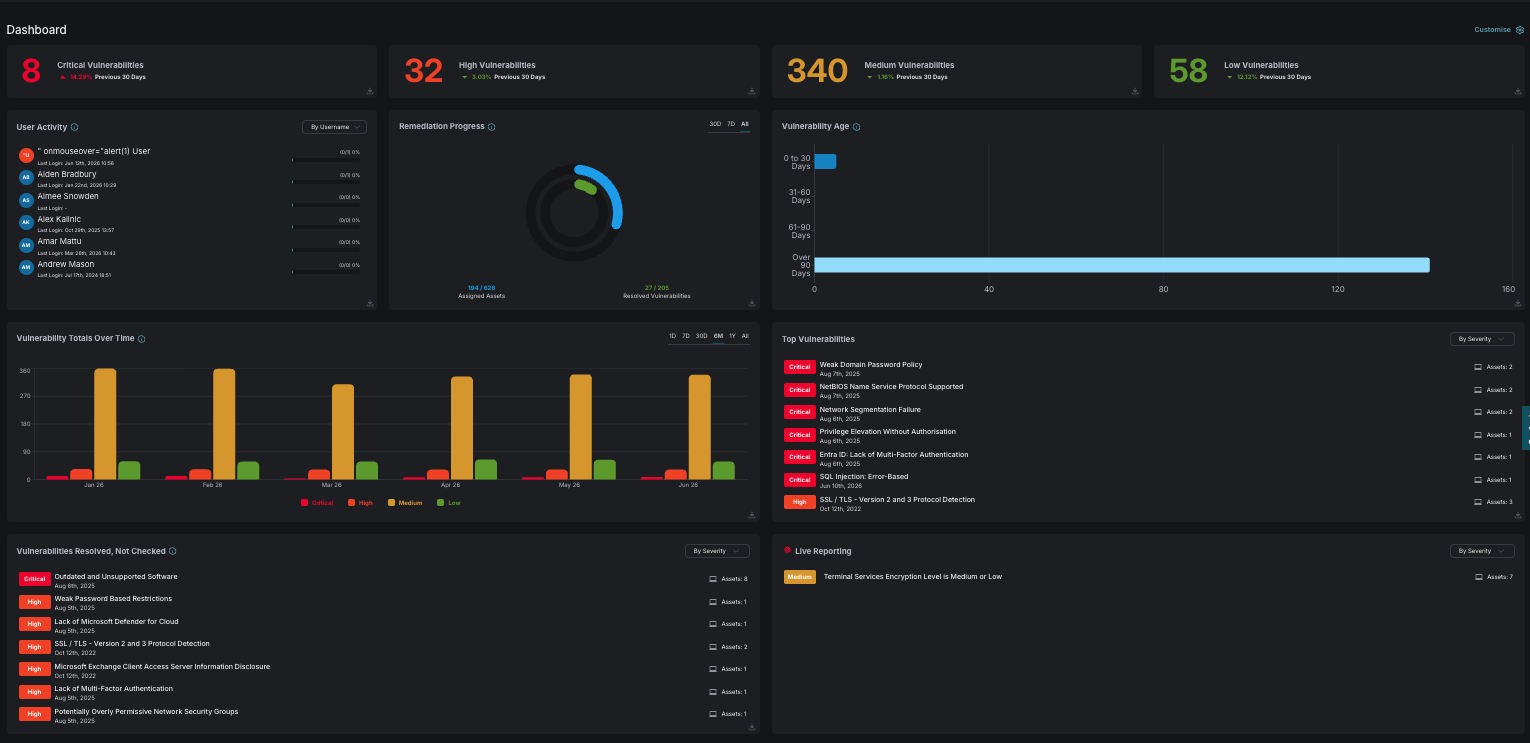
GuardNest provides an interactive, centralized platform that brings security findings, vulnerability information, reporting, and remediation tracking together in one place.
Instead of relying on separate spreadsheets, static reports, and disconnected processes, businesses can gain a clearer understanding of their security posture and the actions needed to improve it.
Greater visibility with interactive reporting
Traditional penetration testing reports provide valuable findings, but security teams need a practical way to access and manage that information.
GuardNest offers interactive dashboards and digital reporting, making it easier to review vulnerabilities, understand findings, and monitor outstanding issues.
Its live reporting capabilities also provide visibility into findings during active testing engagements, helping teams begin reviewing and addressing security risks sooner.
Continuous scanning and vulnerability management
GuardNest supports ongoing vulnerability management through integrated scanning capabilities, with scanning frequency and coverage depending on the selected service.
This can help organizations identify known weaknesses across relevant systems and applications between scheduled penetration tests.
Rather than relying on one assessment to understand their security, businesses can maintain more regular visibility into potential risks as their environments evolve.
Making remediation easier to manage
Identifying a vulnerability is only useful if the organization can take action.
GuardNest helps teams review findings, prioritize remediation activities, and track progress toward resolution.
By centralizing this information, businesses can improve accountability and reduce the risk of important security issues being overlooked.
It also helps IT teams and security consultants work from a shared view of outstanding vulnerabilities and the actions needed to address them.
Helping businesses get more from penetration testing
Penetration testing shouldn't end when the final report is delivered.
GuardNest helps businesses turn test findings into an ongoing vulnerability management process.
By bringing penetration testing results and scanning information into a centralized platform, organizations can make better-informed decisions, monitor improvements, and maintain visibility between assessments.
The result is a more connected approach to cybersecurity that focuses on managing risks, not just identifying them.
Penetration testing vs. continuous vulnerability scanning: Why you need both
Penetration testing and continuous vulnerability scanning address different areas of cybersecurity, but they are most effective when used together.
Penetration Testing | Continuous Vulnerability Scanning |
|---|---|
Provides an in-depth security assessment at a specific point in time | Provides regular visibility into known vulnerabilities |
Uses expert-led techniques to simulate real-world attacks | Uses automated tools to identify potential security weaknesses |
Explores how vulnerabilities could be exploited | Identifies newly discovered or introduced vulnerabilities |
Helps assess the potential impact of security weaknesses | Supports ongoing risk prioritization and remediation |
Provides detailed findings and recommendations | Helps monitor security risks between assessments |
By combining these approaches, businesses can understand their existing weaknesses while maintaining greater awareness of new risks.
This is particularly valuable for organizations managing growing IT environments, preparing for compliance assessments, or looking to demonstrate more consistent security practices.
Rather than viewing penetration testing as a standalone annual activity, organizations can make it part of a wider, ongoing cybersecurity strategy.
Moving from periodic assessments to ongoing security
Closing the security gap doesn't mean replacing the security practices your business already has in place.
It means building on them.
Penetration testing provides valuable insight into how your systems could be compromised. Continuous vulnerability scanning helps identify weaknesses as they emerge. Effective remediation processes help ensure that findings lead to meaningful action.
Together, these activities support a more consistent approach to protecting business systems and sensitive information.
For organizations looking to strengthen their security posture, the focus should be on three things:
Understand your existing risks through expert-led penetration testing.
Maintain visibility between assessments with ongoing vulnerability scanning.
Act on findings through clear prioritization, remediation tracking, and follow-up testing.
This approach helps businesses spend less time wondering what might have changed since their last assessment and more time addressing the risks that matter.
Conclusion
Penetration testing is a critical part of a strong cybersecurity strategy, but it shouldn't be the only time your organization evaluates its security.
With new vulnerabilities emerging and technology constantly changing, businesses need to look beyond point-in-time assessments and consider how they can maintain visibility throughout the year.
At WorkNest Secure, our Penetration Testing services, combined with ongoing vulnerability management through GuardNest, help organizations identify weaknesses, prioritize remediation, and take a more proactive approach to cybersecurity.
Want to understand where your business could be exposed between security assessments?
Download our free Security Gap whitepaper.
If you're an existing GuardNest customer, the Continuous Scanning dashboard is live on your account now. Log in to see it, configure your SLA settings and walk through the updated workflows.
If you're new to GuardNest, book a demo and we'll show you how Continuous Scanning works against the targets that matter to you.
Why teams love us
From robust threat defence to dependable regulatory assurance, our cybersecurity service helps organisations stay resilient, safeguard their data, and concentrate on what truly drives their success.

We’ve always been very impressed with the cyber security services WorkNest provide us. Their professional approach, knowledge and flexibility have ensured they have become a key trusted partner in our supply chain.

Paymentsense
Founder
WorkNest Secure delivered a highly professional and thorough incident response service. Their team’s technical knowledge, attention to detail, and clear communication throughout the process made a complex area easy to navigate. The quality of the analysis and final reporting gave us real assurance and added value to our internal security efforts, minimising the impact to the business.
Shoezone
Head of IT
WorkNest Secure perform Web Application and Infrastructure Penetration Testing for Pharmacy2U. They are always professional to engage with, provide an excellent level of service, and the addition of GuardNest makes receiving and interrogating the results of the service very easy indeed.
We look forward to working with them in the future and trust the work they deliver.
Pharmacy2U
Founder
WorkNest Secure stand out in the field of penetration testing due to the skillset of people they have working there. We undertook a complex bespoke pentest with them, which required a lot of pre-work in order to make sure it was scoped correctly, and they took the time to come onsite to make sure all was correct prior to commencing.
From my experience with them, they are very intelligent people with a deep understanding of the security landscape, and we will continue to use them for future testing requirements.
Interactive Investor
Information Security Manager